
By: Hailey Addonizio
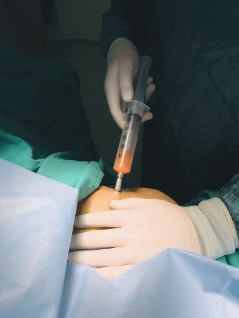
As demand for cosmetic body-contouring procedures continues to grow, companies have strong incentives to secure intellectual property protection for innovations in the field.[1] Yet patent law generally does not permit an inventor to claim exclusive rights to a desired result, such as “making a waist smaller.”[2] Nonetheless, the technology used to achieve it may qualify for patent protection.[3] On September 1, 2026, the American Society of Plastic Surgeons released its 2025 statistics report, reporting a seven percent increase in cosmetic surgical procedures and identifying liposuction as one of the most in-demand procedures.[4] Liposuction provides a useful illustration: the distinction between patenting a surgical procedure and patenting the equipment used to perform it can shape both the available legal remedies and the commercial value of the invention.[5]
Patent protection for surgical procedures, such as liposuction, carries an important limitation.[6] Under 35 U.S.C. § 287(c), certain remedies for patent infringement are unavailable against medical practitioners and related health care entities for qualifying medical or surgical activity.[7] This statute does not prohibit patenting surgical procedures; it limits enforcement in these circumstances.[8] However, this protection does not extend to the use of a patented machine in violation of its patent.[9] This distinction matters for liposuction technology because, although remedies against practitioners performing a patented surgical method may be restricted, the equipment used during that procedure may remain subject to patent enforcement.[10]
Solta Medical’s VASERlipo system illustrates this distinction. The system uses ultrasound to break up fatty tissue for aesthetic body contouring.[11] Solta’s patent-marking page identifies a utility patent for the system, showing how companies can protect the equipment behind a cosmetic procedure.[12] The utility patent associated with VASERlipo demonstrates the specificity with which such protection may be defined.[13] Claim 1 of U.S. Patent No. 8,795,183 describes an ultrasonic handpiece with a particular arrangement of internal ridges, a channel, and a seal that mechanically isolates the ultrasonic driver assembly from the handpiece’s outer wall.[14] The claim therefore focuses on a defined equipment configuration, rather than liposuction generally or the cosmetic result itself.[15]
Because claim 1 of the ’183 patent covers a handpiece rather than a surgical method, a practitioner’s use of equipment within that claim would implicate the device exclusion in § 287(c)(2)(A)(i).[16] The fact that the equipment is used during surgery would not, by itself, trigger the statute’s protection.[17] This illustrates why claim drafting matters commercially: a company must consider both the invention it claims and whether the conduct it seeks to prevent falls within a statutory restriction on remedies.[18]
Against this backdrop of sustained demand for liposuction, companies developing the technology must treat patent protection as only one part of their business strategy.[19] An IP asset’s ability to be legally enforced and transferred is an important consideration in determining its value.[20] That valuation can inform licensing negotiations, sales, and acquisitions involving the technology.[21] Applied to liposuction, this makes the procedure-versus-device distinction commercially significant: restrictions on remedies against practitioners may limit the leverage offered by certain surgical-method claims, while equipment claims may provide protection against competing manufacturers.[22] Companies should therefore consider both claim scope and available remedies when developing their portfolios and negotiating licenses.[23]
For competitors, this distinction also leaves room to develop alternative technology aimed at the same cosmetic result.[24] The relevant question is whether their equipment falls within the protected claims, not simply whether it produces a smaller waist.[25] In VASERlipo’s case, that assessment requires examining the utility patent’s specific handpiece limitations.[26] Companies developing competing equipment must therefore consider the scope of existing patent rights when deciding how to differentiate their products.[27]
Although exclusive rights to “making your waist smaller” might be commercially attractive, patent protection ultimately depends on the specific innovations that produce that result.[28] Liposuction illustrates why businesses must consider both what a patent protects and how they can enforce those rights.[29] For companies bringing cosmetic technology to market, this distinction can shape patent strategy, licensing negotiations, and competition long before a patient enters the operating room.[30]
[1] See Lift Procedures Led Growth as Demand for Restoration Drove Plastic Surgery in 2025, New ASPS Report Reveals, Am. Soc’y of Plastic Surgeons (Sep. 1, 2026) [hereinafter Growth in Plastic Surgery Demands], https://www.plasticsurgery.org/news/press-releases/lift-procedures-led-growth-as-demand-for-restoration-drove-plastic-surgery-in-2025-new-asps-report-reveals [https://perma.cc/QX74-WG3E] (reporting increased demand for cosmetic surgical procedures and identifying liposuction as one of the most frequently performed procedures); Valuing Intellectual Property Assets, World Intell. Prop. Org. [hereinafter Valuing IP Assets], https://www.wipo.int/en/web/business/ip-valuation [https://perma.cc/5N93-9AAS] (last visited Oct. 23, 2026) (explaining that IP assets derive value from exclusivity and are important commercial assets for licensing, sale, financing, and business strategy).
[2] 35 U.S.C. § 112(b); MPEP § 2173.05(g) (9th ed. Rev. 1, Nov. 2024) (explaining that patent claims must define the invention with sufficient clarity and that claim language directed only to a desired result may fail to provide clear claim boundaries); How to Apply for a Patent, U.S. Pat. & Trademark Off. (Apr. 22, 2026) [hereinafter How to Apply for a Patent], https://www.uspto.gov/patents/basics/patent-process-overview [https://perma.cc/2ETP-RBTM] (explaining that patent protection may be available for qualifying inventions, including machines and processes).
[3] How to Apply for a Patent, supra note 2 (describing eligible inventions and additional patentability requirements).
[4] Growth in Plastic Surgery Demands, supra note 1.
[5] See 35 U.S.C. § 287(c)(1)–(2)(A)(i); Valuing IP Assets, supra note 1 (supporting the relationship between available remedies and commercial value).
[6] See id. § 287(c)(1).
[7] Id. § 287(c)(1)–(2)(A).
[8] See id. § 287(c)(1) (limiting specified remedies for conduct that constitutes infringement).
[9] Id. § 287(c)(2)(A)(i).
[10] See id. § 287(c)(1)–(2)(A)(i).
[11] The VASER System, Solta Med., https://www.vaser.com/hcp/ [https://perma.cc/BNS5-2UB3] (last visited Oct. 23, 2026).
[12] Solta Patents, Solta Med., https://www.soltapatents.com/ [https://perma.cc/3S96-FNHK] (last visited Oct. 23, 2026).
[13] See U.S. Patent No. 8,795,183, claim 1 (filed Dec. 10, 2010) (issued Aug. 5, 2014).
[14] Id.
[15] See id.
[16] See 35 U.S.C. §§ 271(a), 287(c)(2)(A)(i) (providing that protected medical activity does not include the use of a patented machine); ‘183 patent, claim 1 (claiming a handpiece for an ultrasonic medical device).
[17] See § 287(c)(2)(A)(i) (excluding the use of a patented machine from the definition of protected medical activity).
[18] See id. § 287(c)(1)–(2)(A)(i); MPEP § 2173 (9th ed. Rev. 1., Nov. 2024) (explaining the public-notice function of claim boundaries).
[19] See Valuing IP Assets, supra note 1 (discussing IP protection and management as part of business strategy).
[20] Id.
[21] See id.
[22] See 35 U.S.C. §§ 271(a), 287(c)(1)–(2)(A)(i) (addressing unauthorized manufacture and sale of patented inventions and the exclusion of patented machines from protected medical activity); Valuing IP Assets, supra note 1 (identifying enforceability and exclusion of competitors as relevant to IP value).
[23] See § 287(c)(1)–(2)(A)(i); Valuing IP Assets, supra note 1 (supporting the claim-scope and enforcement considerations applied in the text).
[24] See MPEP § 2173 (9th ed. Rev. 1., Nov. 2024) (explaining the role of claims in defining protected subject matter).
[25] Id. (explaining that claims inform the public of the boundaries of protected subject matter).
[26] U.S. Patent No. 8,795,183, claim 1 (filed Dec. 10, 2010) (issued Aug. 5, 2014).
[27] See MPEP § 2173; ‘183 patent, claim 1 (providing the claim boundaries relevant to the competitive analysis).
[28] See § 112(b); MPEP § 2173 (explaining that patent claims must particularly point out and distinctly claim the invention and define the boundaries of protected subject matter); How to Apply for a Patent, supra note 2 (explaining that patent protection may be available for qualifying inventions, including machines and processes).
[29] See §§ 271(a), 287(c)(1)–(2)(A)(i).
[30] See id. § 287(c)(1)–(2)(A)(i); Valuing IP Assets, supra note 1 (supporting the concluding application to business strategy).