
By: Stanley Miner
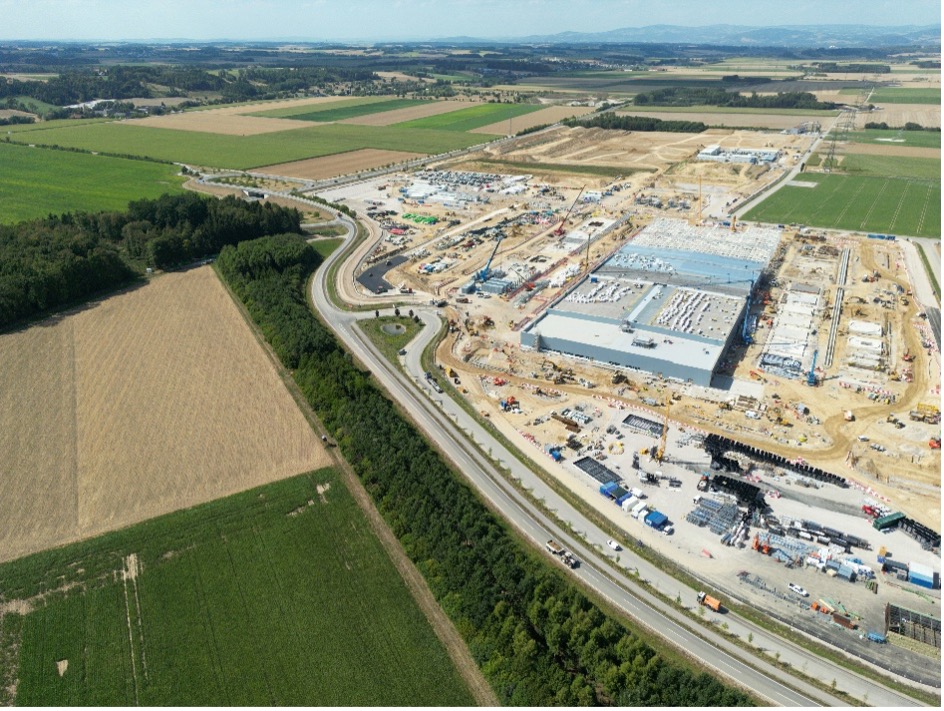
On January 20, 2026, the federal Office of Indian Energy Policy and Programs formally suggested to native tribes that investing in hyperscale data center expansion could be a massive opportunity for economic growth on tribal land.[1] Hyperscale data centers are large buildings or campuses that house complex computers and require vast amounts of power to operate.[2] This nudge from the federal government comes in the wake of a 2025 executive order which accelerated the federal permitting of data center infrastructure.[3] Since that point, many tribes have been approached by companies looking to build data centers on their land.[4]
Some tribes, such as the Cachil Dehe Band of Wintun Indians (“Cachil”), have invested in building energy microgrids and are actively working on data center projects.[5] Through their company, Colusa Indian Energy (“Colusa”), the Cachil are working with other tribes to develop the infrastructure to support data centers on their land.[6] This initiative includes over fifty tribes, many of which view hyperscale data centers as inevitable and the revenue as an escape from poverty.[7] The initiative focuses on building energy microgrids that are fully self-contained and controlled by the tribe, which creates power independence and puts the tribe in a strong bargaining position.[8]
This approach stands in contrast to other tribes, such as the Seminole Tribe, which imposed a moratorium in March out of concern that permitting large investment groups to construct data centers on tribal land could lead to exploitation and abuse of tribal resources.[9] Later in the year, the Kickapoo Tribe took a formal position opposing construction of data centers on its land, and the Cherokee Tribe banned all hyperscale data centers on tribal land.[10]
Data center companies are eyeing tribal land because tribes are sovereign, self-governing nations, who do not have to follow state and municipal law, which some parties believe makes tribal land an attractive option for development projects.[11] While the sovereignty of tribes has the potential to speed up the process of building data centers, it also has the potential to throw a wrench in the contracting process.[12] Tribes generally have sovereign immunity from contract-based lawsuits unless the tribe has expressly waived its immunity or the suit is authorized by Congress.[13] This gives the tribes an advantage during contract negotiations with non-tribal companies because the company must come to them with terms good enough for the tribe to accept a waiver of immunity, which would give enforceable remedies to the company.[14]
As a result, waiver of immunity language becomes the center of each contract with tribes, and data center companies must get creative to convince tribes to agree to a waiver of immunity with some novel ideas including: giving the tribe a genuine ownership stake, bringing the tribe on as a co-developer, and offering board seats for the project.[15] Waivers of immunity can come in both the form of an explicit waiver as well as a binding arbitration clause, even if it does not mention the terms “immunity” or “waiver”.[16] With a contractual waiver, a tribe or its corporate representative, like Colusa, can be sued in court over breaches.[17]
Despite potential hurdles with sovereign immunity, many tech companies will likely forge ahead in hopes that tribal land will become a lucrative market for data center construction.[18] For some companies, this will be their first partnership with a tribe and could open the door for a mutually beneficial economic exchange.[19] The counsel at these companies must familiarize themselves with local tribal law as well as relevant federal law, otherwise these companies could create contracts that are unenforceable.[20]
But will this push to build data centers lead to more exploitation of tribal land as some tribes fear, or will it be a real economic opportunity as other tribes hope? Data centers have the potential to bring economic opportunities to tribes through investment, jobs, and infrastructure development.[21] On the other hand, there will likely be some data centers built on tribal land that are nothing more than a drain on resources that tribes can ill-afford.[22] The contract negotiating room will be the critical space that decides whether a data center will be an opportunity or exploitation for the tribe.[23] If other tribes follow the example of Colusa and build out their own infrastructure to support the development of data centers, they will likely be in a position of power in the negotiating room and will be able to bring economic success to the tribe.[24]
[1] See Data Centers: Exploring the Opportunity for Tribes, U.S. Dep’t of Energy (Jan. 20, 2026), https://www.energy.gov/indianenergy/articles/data-centers-exploring-opportunity-tribes [https://perma.cc/6GPD-EFGV].
[2] See Phill Powell & Ian Smalley, What is a Hyperscale Data Center, IBM, https://www.ibm.com/think/topics/hyperscale-data-center (on file with the American University Business Law Review) (last visited Oct. 2, 2026).
[3] Exec. Order No. 14318, 90 Fed. Reg. 35385 (July 28, 2025).
[4] See David W. Chen, Big Tech Is Now Targeting Native American Land for Massive Data Centers, N.Y. Times (July 27, 2026), https://www.nytimes.com/2026/07/09/us/data-centers-native-american-tribes.html (on file with the American University Business Law Review) (giving examples of how various tribes approach the spread of data centers differently).
[5] Tribe, REIT Plan AI and Energy Campus in Northern California, Tribal Bus. News (Mar. 28, 2026), https://tribalbusinessnews.com/sections/energy/15552-tribe-partner-plan-ai-and-energy-campus-in-northern-california (on file with the American University Business Law Review).
[6] See Petala Ironcloud, As the Fight Over Data Denters Intensifies Nationwide, Native-Owned Energy Companies Offer a Lower-Water, Higher-Consent Solution, Architect’s Newspaper (Aug. 28, 2026), https://www.archpaper.com/2026/08/colusa-indian-energy/ [https://perma.cc/MDX4-P5T3].
[7] Id.
[8] Id.
[9] See Levi Rickert, Seminole Nation of Oklahoma Passes Moratorium on Data Centers, Native News Online (Mar. 19, 2026), https://nativenewsonline.net/sovereignty/seminole-nation-of-oklahoma-passes-moratorium-on-data-centers/ [https://perma.cc/J6P4-37U8].
[10] See Madyson Fitzgerald, Developers Eyeing Tribal Communities for New Data Center Projects, Brookings Reg. (Sep. 15, 2026), https://www.brookingsregister.com/news/developers-eying-tribal-communities-for-new-data-center-projects/ [https://perma.cc/HUM2-H3T5]; see also Mona Dajani, AI Data Center Deals on Tribal Lands Are Writing a New Playbook, Bloomberg L. (Sep. 15, 2026, at 4:30 ET), https://news.bloomberglaw.com/legal-exchange-insights-and-commentary/ai-data-center-deals-on-tribal-lands-are-writing-a-new-playbook [https://perma.cc/SYU5-TFF7] (explaining how tribal sovereignty, energy resources, and governance flexibility make tribal land attractive for AI data center development).
[11] See Fitzgerald, supra note 10.
[12] See Dajani, supra note 10.
[13] Kiowa Tribe of Okla. v. Mfg. Techs., Inc., 523 U.S. 751, 760 (1998).
[14] See Dajani, supra note 10.
[15] See id.
[16] See Ryan Dreveskracht, Doing Business in Indian Country: A Primer, Am. Bar Ass’n (Jan. 20, 2016), https://www.americanbar.org/groups/business_law/resources/business-law-today/2016-january/doing-business-in-indian-country/ (on file with the American University Business Law Review); see also C & L Enterprises, Inc. v. Citizen Band Potawatomi Indian Tribe of Oklahoma, 532 U.S. 411, 420–22 (2001).
[17] See Dreveskracht, supra note 16; Dajani, supra note 10.
[18] See Dajani, supra note 10.
[19] See Tribe, REIT Plan AI and Energy Campus in Northern California, supra note 5 (showing that, for Strata Expanse, their new data center deal is the first partnership with a tribal nation).
[20] See Dreveskracht, supra note 16.
[21] See Data Centers: Exploring the Opportunity for Tribes, supra note 1.
[22] See Fitzgerald, supra note 10 (describing tribal opposition to data center projects based on concerns over water consumption and resource depletion).
[23] See Dajani, supra note 10 (arguing that the legal and financial terms negotiated today will determine whether tribes realize meaningful economic gains from AI infrastructure projects).
[24] See Ironcloud, supra note 6 (discussing tribe-owned energy infrastructure and microgrid development); see also Dajani, supra note 10 (explaining that tribes controlling infrastructure and participating as project partners possess greater negotiating leverage and are better positioned to capture long-term economic value from data center projects).