By: Francesca Jaubert
In 2010, Congress passed the Dodd-Frank Wall Street Reform and Consumer Protection Act (“Dodd-Frank Act”) in response to the overly optimistic credit ratings that created the housing market bubble collapse.[1] Before the 2008 financial crisis, Credit Rating Agencies assigned AAA ratings to many unworthy securities, only to downgrade them later.[2] Why? Experts found that rate shopping, transparent rating models, and collateralized debt obligations allowed securities issuers to package risky loans into financial products that were structured to receive the “highest possible rating at the lowest possible cost.”[3] The Dodd-Frank Act authorized the U.S. Securities and Exchange Commission (SEC) to investigate how Credit Rating Agencies (“CRAs”) and Nationally Recognized Statistical Rating Organizations (“NRSROs”) are operated and allowed them to promulgate regulations that solve issues in the credit rating business model.[4] The Dodd-Frank Act also permitted the SEC to impose “expert liability status” on CRAs as a measure of accountability for the ratings they issued. [5]
After the SEC completed its investigation, it found that randomly assigning securities issuers to NRSROs for initial credit ratings could solve some of the previously identified issues.[6] However, the SEC decided not to move forward with establishing regulations and rescinded the “expert liability status” for NRSROs’ ratings of asset-backed securities.[7] After making this decision, the SEC failed to follow up with the regulatory safeguards the Dodd-Frank Act intended to provide. [8]
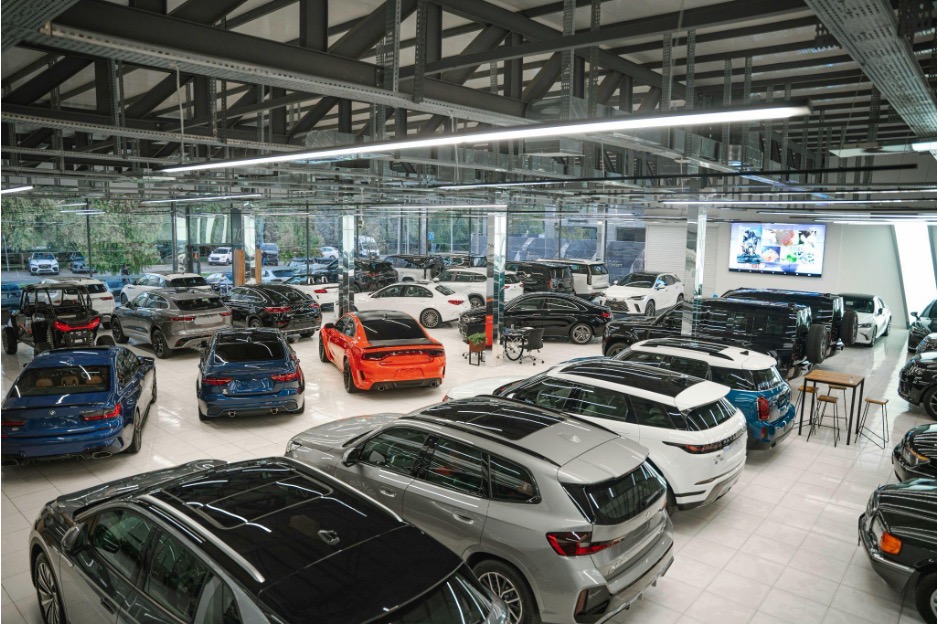
The auto industry now illustrates why the SEC’s failure to implement the Dodd-Frank Act’s regulatory safeguards is so vital to today’s financial markets.[9] Tricolor Auto Group (“Tricolor”) opened in 2007 as a business dedicated to selling used cars to individuals with little to no credit in Hispanic communities across the Southwest United States.[10] The U.S. Treasury labeled Tricolor as a Community Development Financial Institution (“CDFI”) due to the company’s focus on providing lending opportunities to low-income Hispanic borrowers.[11] This designation attracted many large investors on Wall Street, including BlackRock, seeking to expand their sustainable-investment portfolios. [12] Tricolor received significant investments and lines of credit while packaging its risky auto loans into AAA-rated asset-backed securities purchased by firms such as Pacific Investment Management Co. and Alliance Bernstein. [13]
On September 7, 2025, Tricolor liquidated its business by filing for Chapter 7 bankruptcy.[14] The parties involved quickly discovered that around forty percent (40%) of Tricolor’s collateral used to secure new loans had already been pledged in previous financial agreements with multiple financial institutions.[15] The AAA-rated asset-backed securities plummeted from trading at 78 cents on the dollar to only 12 cents on the dollar. [16] Tricolor is one of two companies in the auto market that recently filed for bankruptcy.[17] Investors now fear that companies with low credit ratings are gaming the credit rating system to “take advantage of high investor demand.”[18] If investor fears are correct, these bankruptcies indicate larger issues in investment markets related to the reliability of CRA’s ratings.[19]
There is, however, speculation that Tricolor’s bankruptcy was an isolated event, attributable to its two unreliable owners. [20] The first owner resigned from Tricolor after his previous arrest for selling stolen cars came to light.[21] The other owner, Daniel Chu, left his previous company after accounting irregularities resurfaced, and before that, he was fired from a coaching position for violating student-athlete payout rules. [22] There exists a possibility that the circumstances surrounding Tricolor’s collapse are unique, but it is not the only example of a company relying on asset-backed securities before filing for bankruptcy.[23]
First Brands, a company that sells auto repair parts, recently filed for Chapter 11 bankruptcy. [24] Similar to Tricolor, First Brands used asset-backed securities to package loans into tradable bonds that would provide the company with cash while transferring the credit risk to investors. [25] Investors are drawing parallels between today’s used-car lending industry and the housing industry before the 2008 financial crisis, when many mortgage-backed securities carried AAA ratings. [26]
The Dodd-Frank Act was enacted after the financial crisis to “promote the financial stability of the United States by improving accountability and transparency in the financial system”.[27] However, not enough has been done in terms of reforming regulation.[28] The SEC’s decision to take no action against NRSROs’ ratings of asset-backed securities, coupled with its failure to create meaningful change to how NRSROs are operated, undermines the purpose of Sections 932(a)(8) and 939F(d)(1) of the Dodd-Frank Act.[29] Additionally, the SEC’s own 2024 annual report warned of several financial risks related to “collateralized loan obligations and securitizations backed by auto loans and consumer assets,” but no further developments have been presented in regards to a new business model or assignment procedures.[30] Congress expected the SEC to implement safeguards so businesses and those engaging in investments could rely on unbiased credit ratings to make proper financial decisions, yet the SEC’s actions thus far have gone against the purposes of the Dodd-Frank Act.[31]
[1] See Dodd-Frank Wall Street Reform and Consumer Protection Act, 12 U.S.C. §§ 5301-5641; Alice M. Rivlin & John B. Soroushian, Credit Rating Agency Reform Is Incomplete, Brookings (Mar. 6, 2017), https://www.brookings.edu/articles/credit-rating-agency-reform-is-incomplete/ [https://perma.cc/N8GZ-Y2Q6].
[2] See Rena S. Miller, Cong. Rsch. Serv., IF11916, Credit Rating Agencies: Background and Regulatory Issues 1 (2024), https://www.congress.gov/crs-product/IF11916 [https://perma.cc/BN57-LPVR].
[3] See Efraim Benmelech, The Credit Rating Crisis, in 2010 Number 1 NBER Reporter: National Bureau of Economic Research 8, 8–10 (2010), https://live-nber.pantheonsite.io/sites/default/files/2019-08/2010no1_0.pdf [https://perma.cc/DML8-BDKQ].
[4] See Rivlin & Soroushian, supra note 1. See generally Miller, supra note 2 (“The SEC never defined the term NRSRO or specified how a CRA might become one. Its approach was essentially described as one of ‘we know it when we see it.’”)
[5] See Miller, supra note 2.
[6] See id. (“The 2012 SEC staff study found that the random assignment model could mitigate issuer-payer conflicts but also might fail to do so because NRSROs to provide issuers could continue ‘rating shopping’ and hire other supplemental credit ratings.”)
[7] See id.
[8] See id. (“One academic witness . . . called for further reforms of NRSROs to address continued issues such as conflicts of interest through the issuer-pays model, lack of liability, high concentration, and lack of transparency in the industry.”); see also Rivlin & Soroushian, supra note 1 (recommending the SEC complete the legal liability rule and implement random assignment of NRSROs).
[9] See Christopher Otts, Auto Industry Is Flashing a Warning Sign on U.S. Economy, Wall St. J. (Sep. 25, 2025, at 17:29 ET), https://www.wsj.com/business/autos/carmax-profit-plunge-signals-more-pain-ahead-for-tariff-strained-auto-sector-374966c7 [https://perma.cc/9YDQ-24CR].
[10] Tricolor, https://www.tricolor.com/en-US/our-brand [https://perma.cc/B3AG-685M] (last visited Oct. 6, 2025).
[11] See David Barbuscia, Saeed Azhar & Anirban Sen, US Auto Bankruptcies Show Rising Credit Pain in Low-Income Households, Reuters (Sep. 30, 2025, at 19:57 ET), https://www.reuters.com/business/autos-transportation/us-auto-bankruptcies-show-rising-credit-pain-low-income-households-2025-09-30/ [https://perma.cc/U773-7C9B].
[12] See id.
[13] See The Editorial Board, Tricolor and the Subprime Debt Canary, Wall St. J. (Sep. 14, 2025, at 15:21 ET), https://www.wsj.com/opinion/tricolor-and-the-subprime-debt-canary-loans-ce64ebe7?st=A1s15E&reflink=desktopwebshare_permalink [https://perma.cc/N78L-3MDX].
[14] See id.
[15] See Isabella Farr, Scott Carpenter & Paige Smith, Tricolor Records Show Same Cars Tied to Thousands of Loans, Bloomberg (Oct. 3, 2025, at 15:17 ET), https://www.bloomberg.com/news/articles/2025-10-03/tricolor-records-show-same-cars-tied-to-thousands-of-loans [https://perma.cc/TY8C-UF9L].
[16] See The Editorial Board, supra note 13.
[17] See Barbuscia, Azhar & Sen, supra note 11 (“First Brands became the latest company to unravel, filing for bankruptcy protection on Monday, following the recent bankruptcy of subprime auto lender Tricolor Holdings.”)
[18] See id.; The Editorial Board, supra note 13.
[19] See Nick Beams, After Tricolor Collapse Another Indebted US Auto-connected Firm Goes Under, World Socialist Web Site (Sep. 24, 2025), https://www.wsws.org/en/articles/2025/09/25/tlgd-s25.html [https://perma.cc/QH5B-WWDW] (“A single collapse may have been able to be dismissed as a one-off event but two in the space of just two weeks points to deepening problems in the credit market.”)
[20] See Jacob Adelman, U.S. Banks Missed Warning Signs on Tricolor. Now, Their Losses Are Adding Up, Barron’s (Oct. 6, 2025, at 11:10 ET), https://www.barrons.com/articles/fifth-third-tricolor-jpmorgan-auto-dealer-bankruptcy-3aff3d4b?reflink=desktopwebshare_permalink [https://perma.cc/9MDE-UUMR].
[21] Id.
[22] Id.
[23] See Paige Smith & Isabella Farr, Tricolor’s Busted Money Machine Has Wall Street Rethinking Risks, BL (Oct. 10, 2025, at 08:00 ET), https://www.bloomberglaw.com/bloomberglawnews/bankruptcy-law/XBCHGNAG000000 [https://perma.cc/RLP6-KM9N]; see also Barbuscia, Azhar & Sen, supra note 11.
[24] See Barbuscia, Azhar & Sen, supra note 11.
[25] Id.
[26] See generally Benmelech, supra note 3 (explaining how the deterioration of financial products was seen in AAA-rated securities before the 2008 crisis).
[27] See Miller, supra note 2 (quoting The Dodd-Frank Wall Street Reform and Consumer Protection Act (P.L. 111-203)).
[28] Rivlin & Soroushian, supra note 1.
[29] See Miller, supra note 2. See generally Dodd-Frank Wall Street Reform and Consumer Protection Act, Pub. L. No. 111-203, § 124, 932(a)(8), 939F(d)(1) Stat. 1376 (2010) (codified as amended in multiple sections of 12 U.S.C.) (stating the SEC is responsible for administering rules that “promote accuracy in credit ratings issued by [NRSROs]; and to ensure that such ratings are not unduly influenced by conflicts of interest”); Letter from Katherine Hsu, Senior Special Couns., U.S. Sec. and Exch. Comm’n, to Ford Motor Credit Co. LLC (Nov. 23, 2010), https://www.sec.gov/divisions/corpfin/cf-noaction/2010/ford072210-1120.htm [https://perma.cc/RLP6-KM9N].
[30] See Miller, supra note 2.
[31] See generally id. (explaining suggested changes to the regulation of credit rating agencies to protect those who are making investment decisions from conflicts of interest).